Two details worth reading twice during a sale

Today is Black Friday, and many product pages are built to help us decide quickly. Stock messages, countdowns and short product titles all play a part. This article looks at two ordinary-looking details that our scan flagged in anonymised listings, and at what to check before trusting them.
A stock message
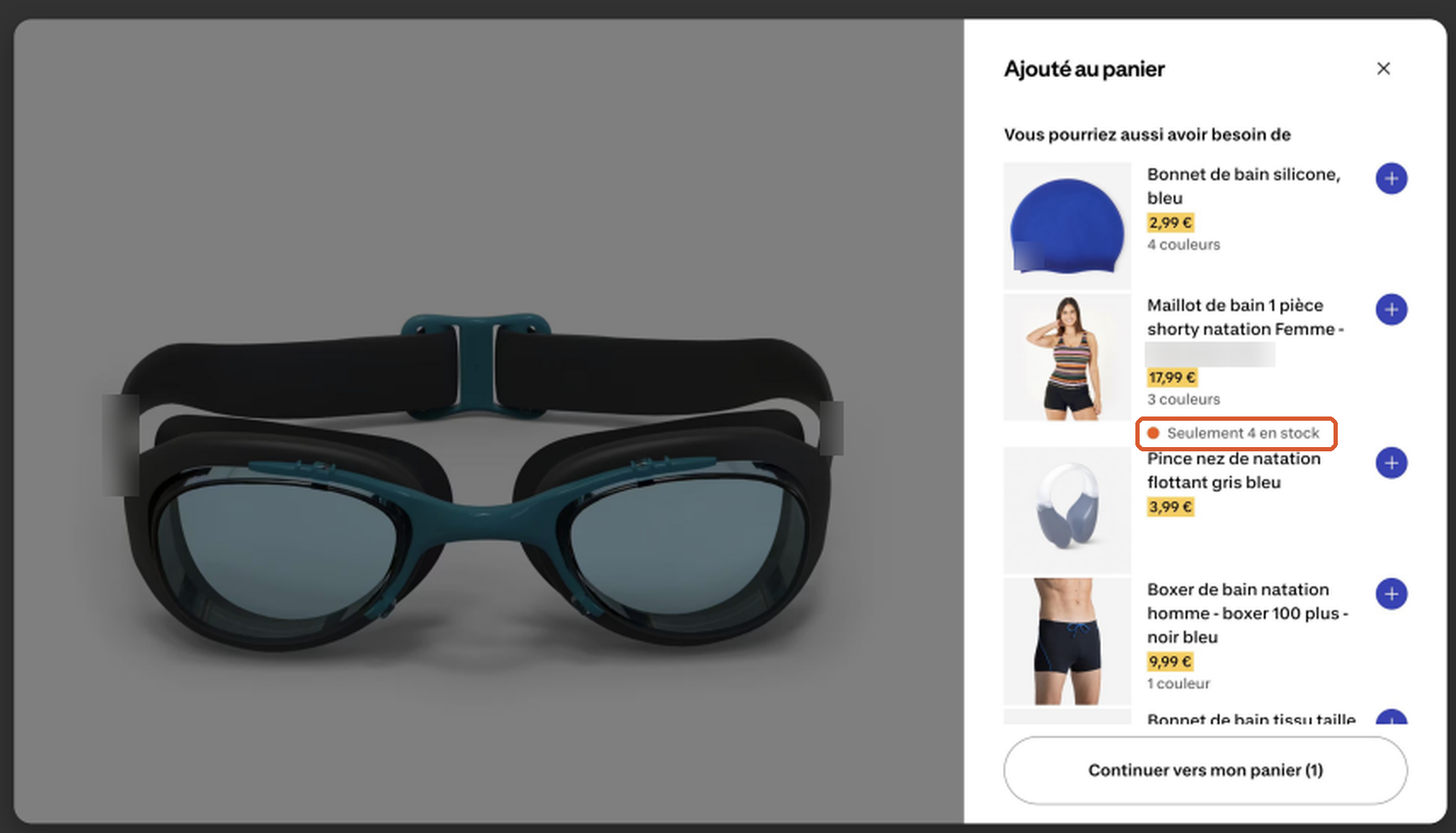
A message such as “only 4 left” can be accurate, since sellers do run out of items. According to the explanations generated by our scan, it becomes a concern when the number does not reflect real availability. In a listing flagged by our scan, an add-to-cart panel suggested a second product with the label “Seulement 4 en stock”. Our scan notes that this kind of message creates a sense of urgency and steers shoppers towards adding the product to their cart and finalising the purchase, and that it is misleading if the number of items left in stock is higher than the one shown. For this practice, our scan points to Annex I of the Unfair Commercial Practices Directive (2005/29/EC).
A title and a composition list that disagree
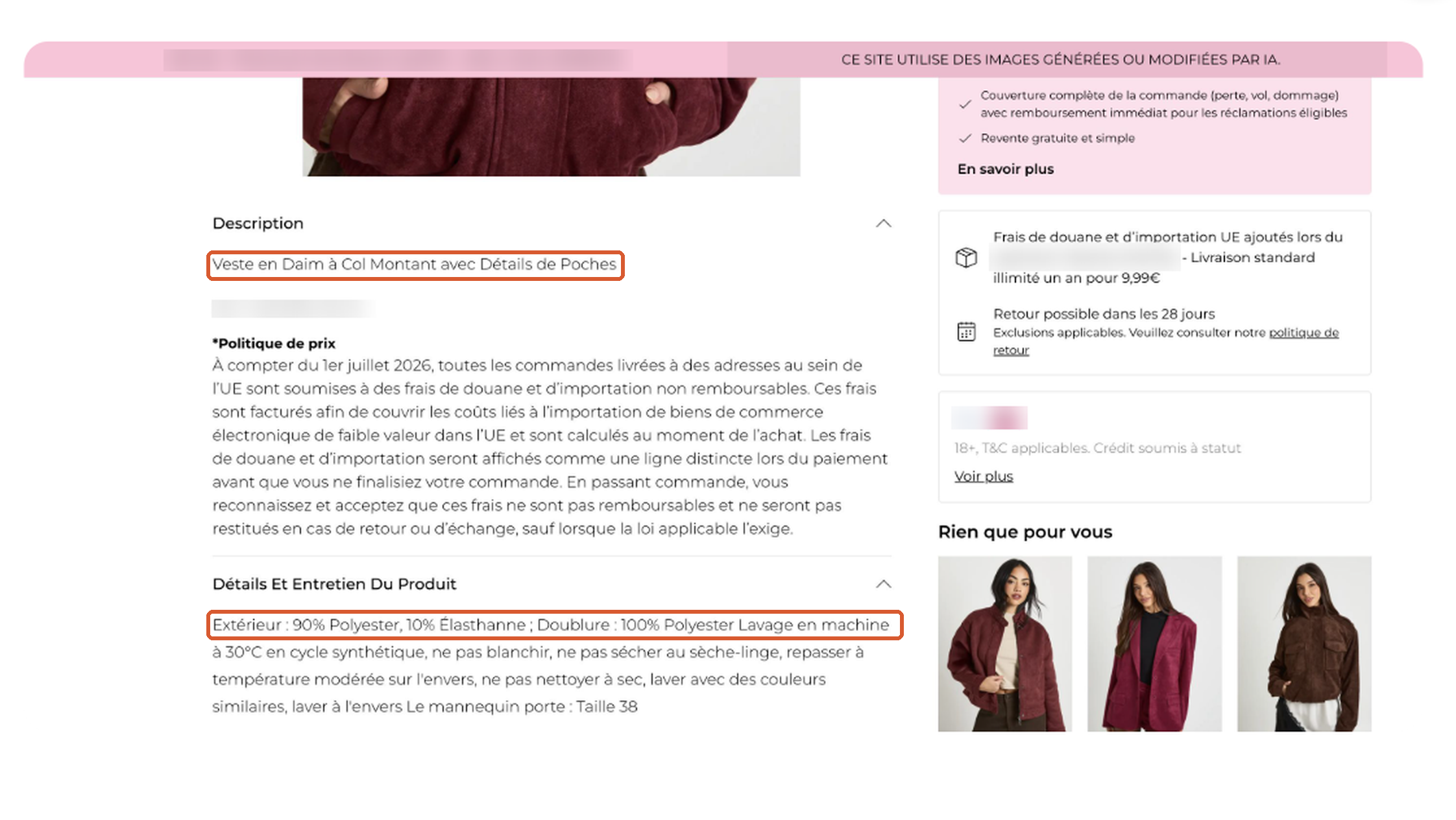
The second example is about wording. On a fashion product page, a jacket was described as a “veste en daim”, which means a suede jacket. The composition on the same page gave 90% polyester and 10% elastane for the outer fabric, and 100% polyester for the lining. Our scan flags this as potential trick wording, since several synthetic materials are listed and no suede is, and links it to Article 6 of the Unfair Commercial Practices Directive.
What you can do as a shopper
Read the composition or specification line next to the product title. When a message tells you to hurry, give yourself a minute, because a real stock level will still be there after one.
A note on the examples
The listings above are individual, anonymised, and were not chosen to represent a sector or to produce statistics. They are potential issues flagged by our scan. Whether a given practice is unlawful is for regulators and courts to decide.
At Fairpatterns, we scan websites and apps for patterns like these at scale, so that these checks do not rely on a shopper noticing them in the middle of a sale.
Trusted by clients worldwide




Jolling de Pree
Partner at De Brauw

Name Surname
Position, Company name


