How to read a Black Friday discount

Every year around late November, the same visuals appear on most shopping sites: a red label, a large percentage, an old price with a line through it. They are built to be understood at a glance, which is also why they are rarely questioned. This article looks at what that crossed-out price can refer to, and what to check before trusting it.
What the rule says
In line with Article 6 of the Unfair Commercial Practices Directive (2005/29/EC), Article 6 of the Consumer Rights Directive (2011/83/EU) and, for French sites, Article L. 112-1-1 of the French Consumer Code, our scan explains that a crossed-out price should be the lowest price the seller applied during at least 30 days before the reduction.
Three things that can sit next to a discount
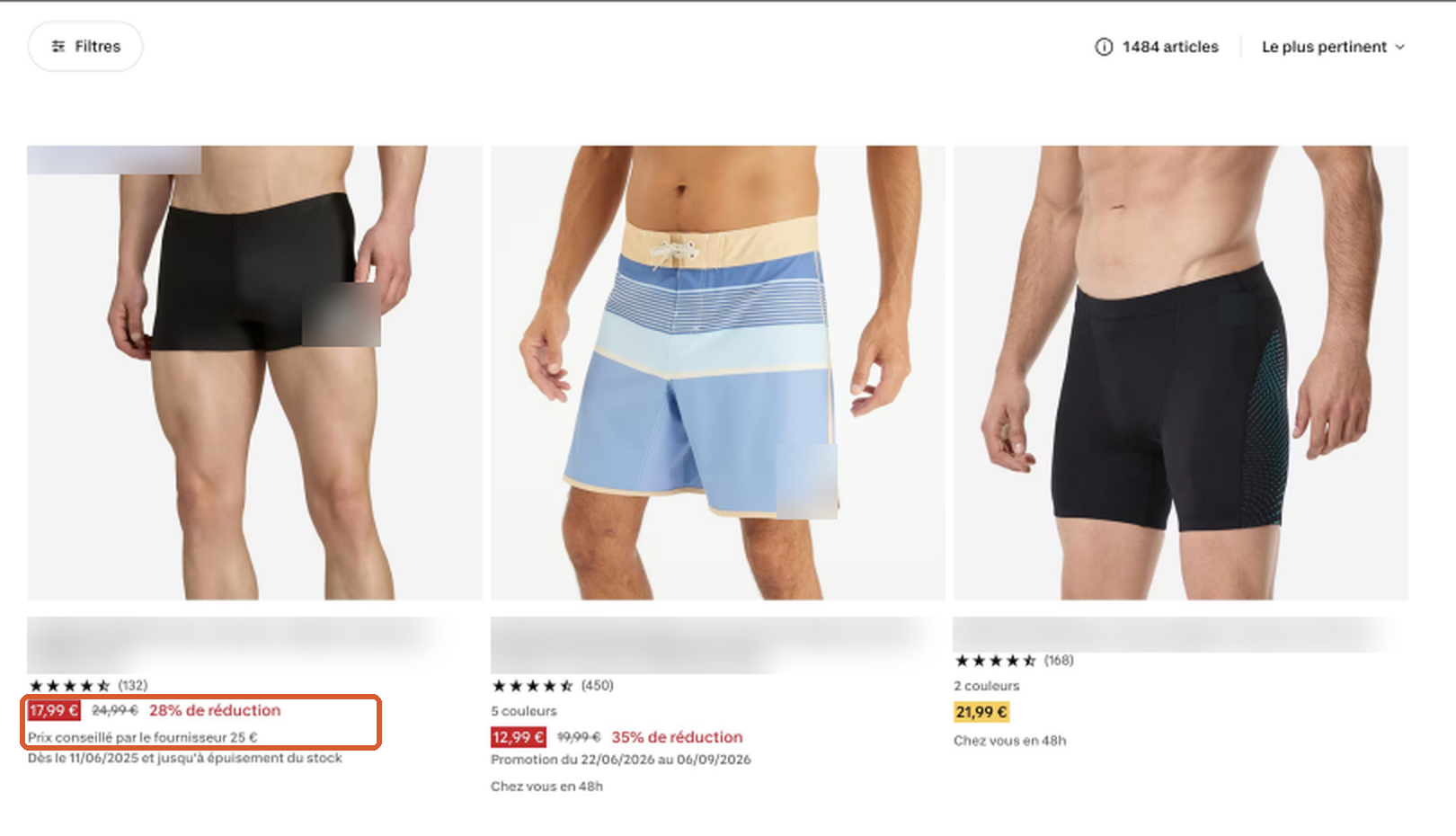
A recommended price. In one listing flagged by our scan, a product at 17,99 € showed a crossed-out 24,99 € and a “28% de réduction” label, with a line below saying the supplier’s recommended price was 25 €. Our scan notes that a recommended price is very theoretical and could be inflated, so it is a different thing from the lowest price the seller applied in the previous 30 days.
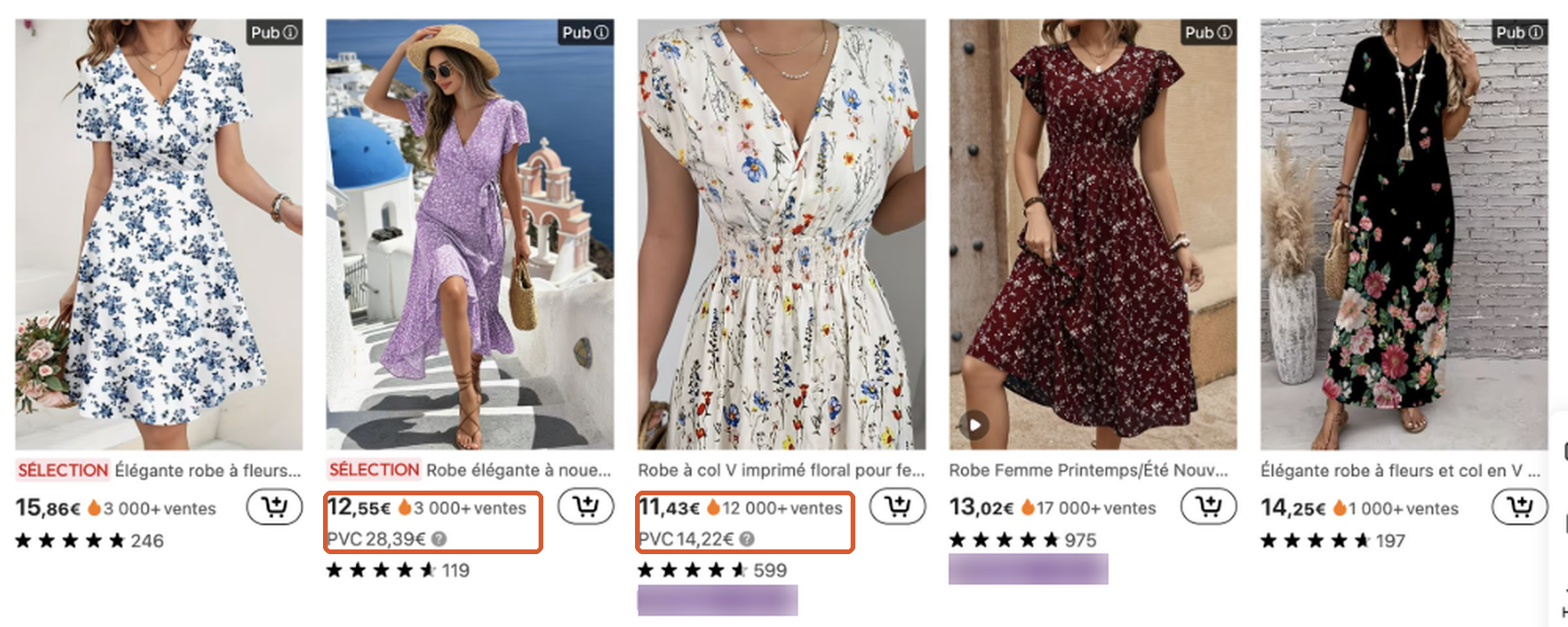
A “PVC” under the price. On a marketplace listing, 12,55 € appeared next to “PVC 28,39 €”, and 11,43 € next to “PVC 14,22 €”. PVC stands for “prix de vente conseillé”, the recommended retail price. Our scan flags that this gives the impression of a reduction, while the page does not say who set that price or how it was calculated.
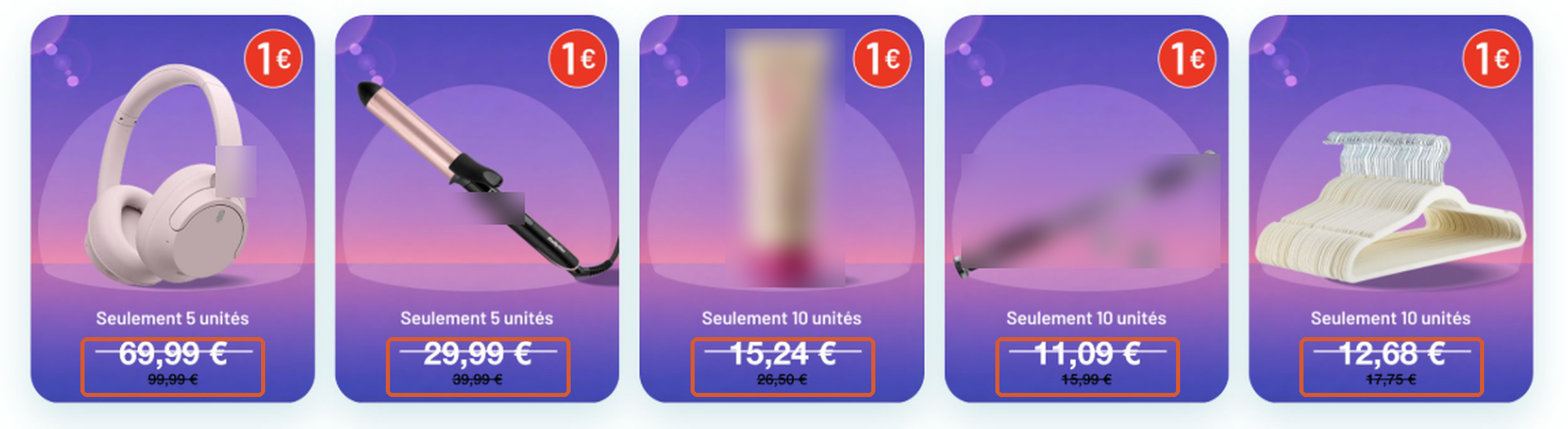
Two crossed-out prices. On a flash offer page, each product at 1 € carried two crossed-out prices and no stated reference. Our scan flags this as potentially misleading if neither crossed-out price matches the seller’s lowest price of the previous 30 days.
A word on stock messages
Messages like “only 4 left” or “only 10 units” can be accurate. Our scan flags them as potential false scarcity when the same wording repeats across unrelated products, because a shopper then has little way to tell a real stock level from a sales line. For this, our scan points to Annex I of the Unfair Commercial Practices Directive as the legal grounds against these messages..
What you can do as a shopper
Look at what the old price is called. Use the price history if the site shows one, and compare the same product elsewhere. A minute before paying costs very little, even in a flash sale.
A note on the examples
The examples above are individual listings, anonymised, and were not chosen to represent any sector or to give statistics. They are potential issues flagged by our scan. Whether a given practice is unlawful is for regulators and courts to decide.
At Fairpatterns, we scan websites and apps for patterns like these at scale, so that these checks do not depend on a shopper noticing them in two seconds.
Trusted by clients worldwide




Jolling de Pree
Partner at De Brauw

Name Surname
Position, Company name


