Countdowns and purchase limits in video game shops
Video game shops use many of the same urgency cues as online retail: limited-time offers, countdown timers, “NEW” labels and purchase limits. These cues can make an item feel like an opportunity that might disappear, and they encourage a quick decision. This article looks at how they appear in the store screens our scan flagged, and what to check before acting on them.
What the rule says
Under Articles 5 and 6 of the Unfair Commercial Practices Directive (2005/29/EC), commercial practices must not mislead consumers or distort their ability to make an informed purchasing decision. More specifically, Annex I, point 7 of the Directive lists, among the practices considered unfair in all circumstances, falsely stating that a product will only be available for a very limited time in order to elicit an immediate decision and deprive consumers of sufficient opportunity or time to make an informed choice.
A countdown timer is not a problem in itself. It matters when the offer does not actually end at zero, for example when the same offer returns with a refreshed timer.
1. A countdown that creates pressure to act
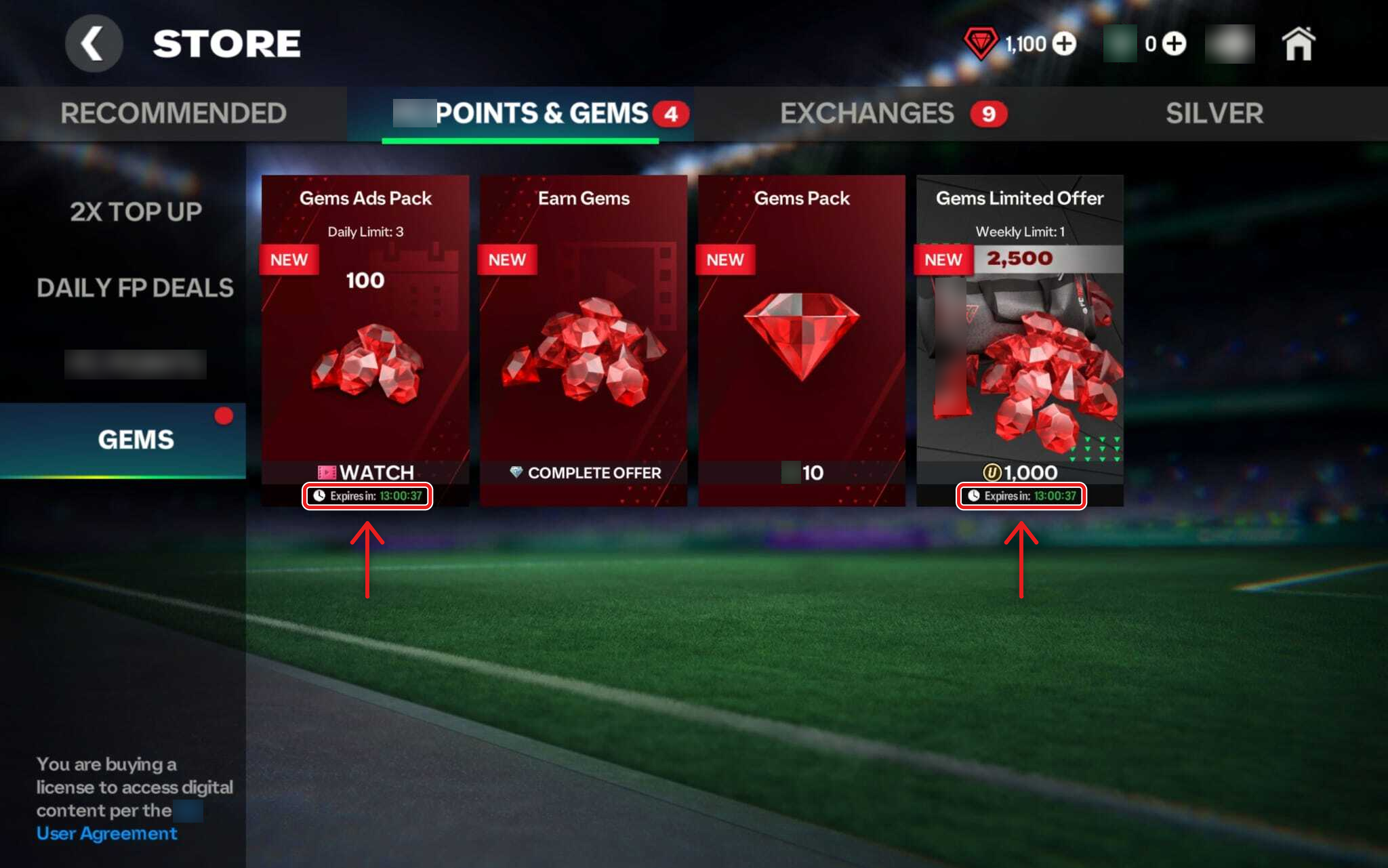
In one screenshot flagged by our scan, the Points & Gems section of a game’s shop shows “Expires in: 13:00:37” under a Gems Ads Pack. A second offer, the Gems Limited Offer, shows exactly the same countdown.
A timer gives players the impression that they have a limited window to claim an offer, which can encourage an immediate decision. The important question is whether the offer really expires when the countdown ends. A screenshot captures one moment, so it cannot show whether a timer resets. Timers that restart repeatedly with no real change in availability could create a misleading impression of urgency.
2. Purchase limits that make offers feel scarce
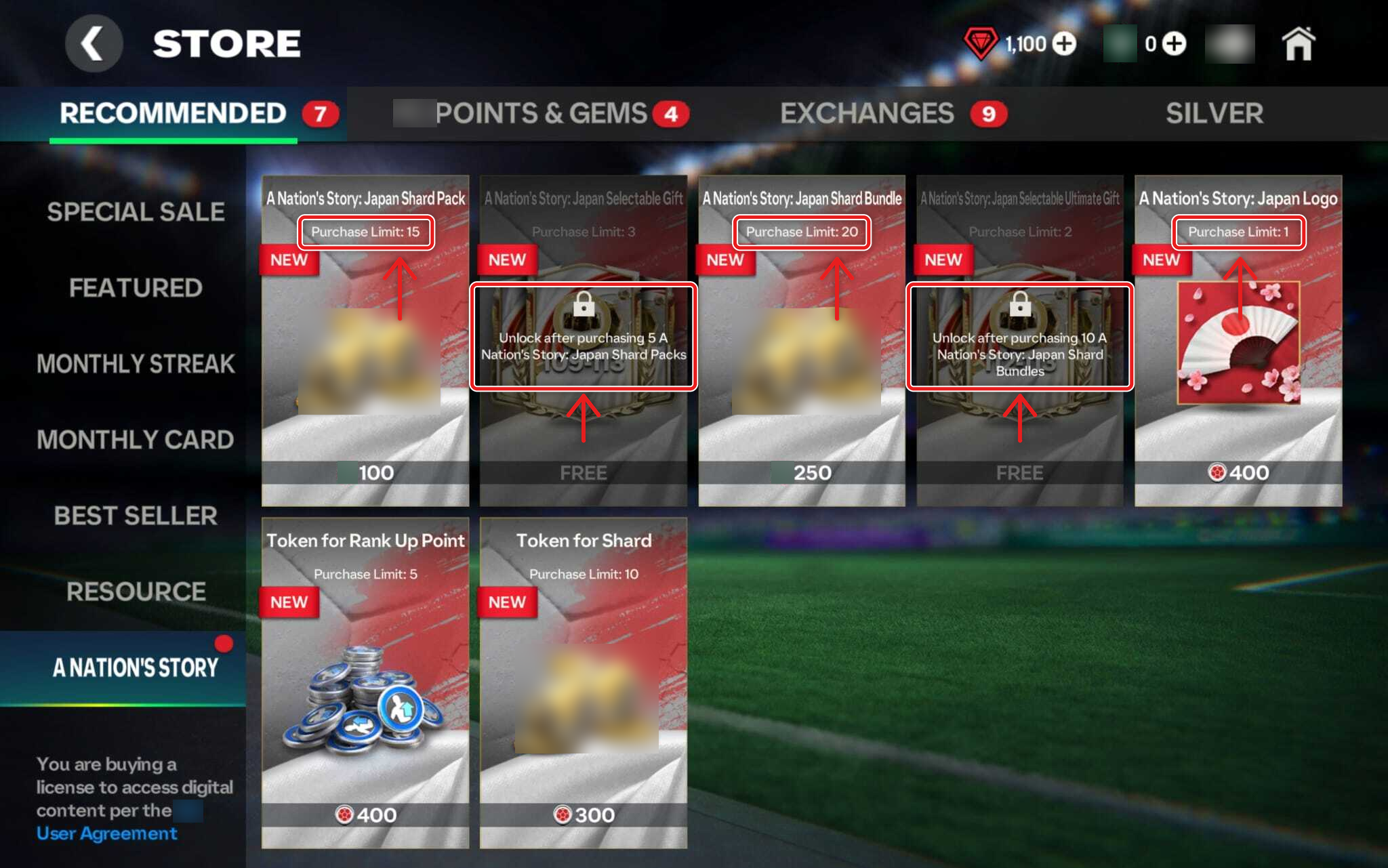
In another screenshot, an event-themed section of the shop lists several products, each with a purchase limit. Some are limited to 15 or 20 purchases, and a cosmetic item is limited to one.
Purchase limits can serve legitimate purposes, such as preventing excessive purchases or controlling access to promotional items. Combined with prominent “NEW” labels, they can also reinforce the impression that an opportunity is scarce. What matters is whether a limit is a genuine restriction that is explained to the player, or a way to push spending before the player has considered the offer.
3. Locked rewards that encourage further purchases
The same screen shows selectable gifts marked as locked. One explains that the gift unlocks after purchasing five packs from the event, and another after ten bundles.
This kind of progression may lead players to focus on completing the number of purchases needed for the next reward, instead of judging each purchase on its own. Together with time-limited offers or other urgency cues, it can make it harder to step back and see the total amount of currency or money involved.
What you can do as a player
Before claiming a limited-time offer, it helps to ask:
- Does the countdown match a real expiry, or does it restart?
- Is it explained what happens when the timer reaches zero?
- Are purchase limits clearly explained?
- Do locked rewards require further purchases, and how many?
- How much real money does the required in-game currency represent?
A note on the examples
The screenshots are individual, anonymised examples flagged by our scan. They are not statistics and do not establish that a timer resets, that an offer is misleading or that a particular practice is unlawful. The first shows two offers with the same displayed countdown. The second shows purchase limits and purchase-dependent unlocks. Whether a given practice breaches consumer protection rules depends on the wider circumstances and is for regulators and courts to decide.
At Fairpatterns, we scan websites and apps for patterns like these at scale, to help identify design choices that may influence purchasing decisions.
Trusted by clients worldwide




Jolling de Pree
Partner at De Brauw

Name Surname
Position, Company name


